
 4.0 PRObattery · on the go
 Home 230Vfor home
 Baby food warmersfrom 6 months
 Night Stationfor the night




 Cleaning Wipes Monthly Pack
 Home & 2Go Bundle
 Formula Dispenser Avent
 Baby Bottle Bundle











Does health insurance cover a breast pump? (Switzerland)
Renting a breast pump with a prescription: when basic insurance covers the cost, for how long, what the deductible and supplemental insurance mean, and how to get a rental pump.
Contents
In short
Yes, under certain conditions. Basic health insurance in Switzerland covers the rental of an electric breast pump if a doctor prescribes it and there is a medical reason, such as a premature baby, a baby with poor sucking ability, sore nipples, or engorgement. Reimbursement is limited to a maximum amount per day of rental, generally for up to 8 weeks, or up to 8 weeks longer in justified cases. If you buy a pump on your own without a prescription, you’ll usually have to pay for it yourself. Your health insurance provider decides exactly what you’re covered for, so be sure to check with them beforehand.
Many mothers don’t ask themselves whether their health insurance will cover a breast pump until they run into problems with breastfeeding and need a quick solution. The good news: In many cases, basic health insurance covers the rental cost. Here, you’ll learn what requirements apply, who can prescribe the pump, how to get a rental pump in just a few steps, and what you’ll have to pay out of pocket. This article is meant to provide guidance but does not replace the information you’d receive from your health insurance provider.
Breast Pumps and Health Insurance: How Basic Coverage Works
In Switzerland, the list of medical aids and devices—known as MiGeL for short—determines which medical aids are covered by basic health insurance. The Federal Office of Public Health (FOPH) maintains this list as Annex 2 to the Health Care Services Ordinance. Breast pumps are classified in their own product group within this list.
According to MiGeL, basic health insurance covers a medical aid if it:
- corresponds to an item on the list,
- is prescribed by a doctor,
- and is dispensed by an authorized dispensing facility.
For each item, the BAG sets a maximum reimbursement amount. The health insurance company will not pay more than that. If the service costs more than that, you’ll have to pay the difference yourself.
Good to Know
The information in this article is based on the MiGeL edition dated July 1, 2026. The list is updated regularly. Before renting, check with your health insurance provider to find out what applies in your case.
When is a breast pump covered by insurance?
Health insurance does not automatically cover a breast pump after every birth. According to MiGeL, at least one of the following reasons must apply:
For the baby:
- Premature Birth
- Feeding difficulties
- Congenital anomalies
- Organic diseases
For breastfeeding mothers:
- Sore nipples
- Inflammation
- Milk Engorgement
- Temporary treatment with medication
- too much or too little breast milk
For mother and child: a medically necessary separation, such as when your baby is in the neonatal unit.
If you want to pump so your partner can feed the baby or because you’ve returned to work, that doesn’t fall under these reasons. In this case, basic health insurance generally doesn’t cover the cost.
Who is authorized to prescribe a breast pump?
According to the current MiGeL, a prescription from a doctor is required for reimbursement. This can be your OB-GYN, your baby’s pediatrician, or your primary care physician. If your baby is in the hospital, ask the staff there how they handle prescriptions.
And what about the midwife or lactation consultant? They’re often the first to realize that a breast pump can help. They’ll advise you, show you how to pump, and contact your doctor if needed. In March 2025, Parliament passed a law allowing midwives to prescribe certain medications and medical devices on their own in the future. According to the Federal Office of Public Health (FOPH), the federal government is drafting the implementing regulations in several phases. Ask your midwife or health insurance provider whether the new rule already applies to you.
Tip
Basic health insurance covers three breastfeeding counseling sessions if they are conducted by a midwife or a nurse specially trained in breastfeeding counseling. A lactation consultant can help you determine whether you even need a breast pump and, if so, which one.
Here’s how to rent a pump
- Address the issue early on. Tell your midwife, lactation consultant, or doctor where you’re having trouble with breastfeeding. Together, you can determine whether a pump is a good idea.
- Get a Prescription Ask your doctor to write you a prescription for an electric breast pump. It’s important that the medical reason be stated on the prescription.
- Choose a rental location Many pharmacies rent out breast pumps. Ask in advance whether the pharmacy bills your health insurance directly and whether it requires a deposit.
- Add the pump set. The pump set, which includes a breast shield and bottle, is personal and belongs to you. It is listed as a separate item in the MiGeL.
- Submit the invoice If the rental agency does not bill your health insurance directly, you pay the invoice and send it, along with the prescription, to your health insurance provider.
- Renew in a timely manner If you need the pump for longer than 8 weeks, talk to your doctor before the rental period expires. A renewal requires a medical reason.
- Return the pump Clean the pump according to the instructions and return it. You may keep the pump set.
To learn how to pump hygienically and store your milk properly, read the guide “Pumping and Storing Breast Milk.”
How much does a breast pump cost? Maximum reimbursement amount, deductible, copay
The MiGeL sets the following maximum reimbursement amounts for breast pumps. These are the maximum amounts covered by basic insurance, not retail prices.
| Item as listed in MiGeL | Maximum reimbursement | Note |
|---|---|---|
| Electric breast pump, rental | CHF 2.31 per day | Maximum of 8 weeks; up to 8 weeks longer in justified cases |
| Accessory set for the electric pump | CHF 27.85 per set | Up to double the amount for premature infants |
| Manual breast pump, purchase | CHF 47.17 | by regulation |
| Electric Single Pump, Including Accessories, Purchase | CHF 175.65 | by regulation |
| Electric double pump, including accessories, purchase | CHF 341.26 | by regulation |
MiGeL recommends purchasing the pump if you expect to need it for an extended period. The same medical reasons as listed above apply to all items.
Deductible and copayment: Normally, you first pay your deductible—usually 300 francs per year—and then a 10 percent copayment up to a maximum of 700 francs per year. According to the FOPH, there is an exception regarding childbirth: From the 13th week of pregnancy until eight weeks after giving birth, you do not have to pay any portion of the costs for general medical services. This means you pay neither the deductible nor the copayment for a rental breast pump during this period. It’s best to contact your health insurance provider directly to find out how they bill for rental days after this period.
Please note
If the rental fee exceeds the maximum amount, or if you rent without a prescription, you’ll have to pay the difference—or the entire amount—yourself. Be sure to ask the rental office about the daily rate beforehand.
Supplemental Insurance: What It Covers
Supplemental insurance is optional, and each health insurance provider handles it differently. Some policies help cover additional breastfeeding counseling sessions or aids that basic insurance does not cover. CONCORDIA, for example, covers breastfeeding counseling sessions beyond the three sessions paid for by basic insurance through its NATURA and NATURAplus supplemental insurance plans.
Check your insurance policy to see if your supplemental insurance covers part of the cost of a breast pump you’ve purchased. The quickest way to find out is to call or send a message to your health insurance provider. It’s best to ask specifically: “Do you cover the cost of a breast pump, and do you require a prescription for it?”
Should you rent or buy a breast pump?
A rental pump and a pump you own serve different purposes. Some mothers use both in succession: first a rental pump for medical reasons, and later their own, portable pump for everyday use.
| Criterion | Rental pump | Own pump |
|---|---|---|
| Costs | Covered by basic insurance up to the maximum amount with a prescription | Paid out-of-pocket without a prescription |
| Requirements | Medical necessity and a doctor’s prescription | None |
| Duration | Up to 8 weeks; extension of up to 8 weeks possible | as long as you want |
| Type | Often a larger device for home use | often compact, sometimes cordless and wearable in a bra |
| Hygiene | The device is sanitized after return; the pump set is personal | It’s all yours |
| Suitable for | Premature birth, engorgement, separation of mother and child | Work, on the go, occasional pumping |
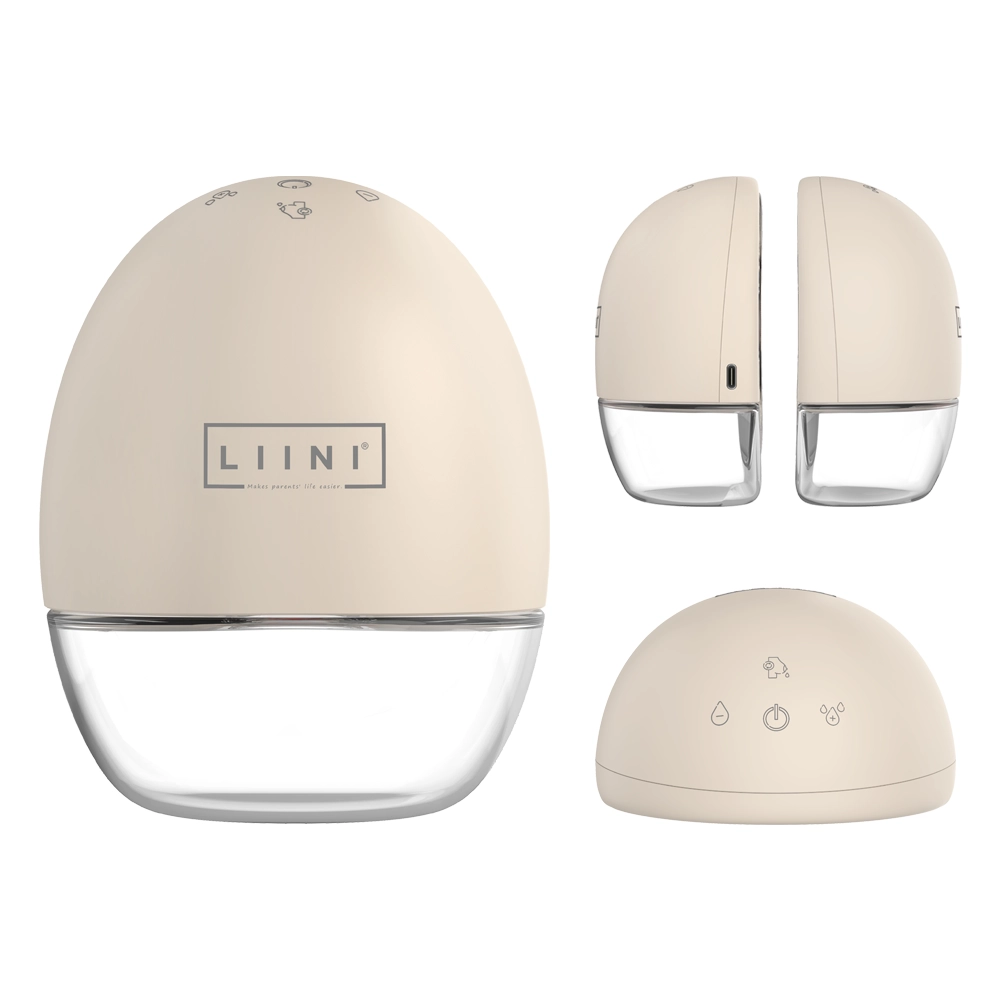
If you’re buying a pump on your own, make sure to choose compatible breast shields and that the parts are easy to clean. The LIINI® breast pump is a cordless pump that you wear inside your bra. It features a stimulation mode and an expression mode, each with five settings, a 180-ml milk container, and nipple shields in sizes 15, 17, and 21 mm. You can find all models under “Breast Pumps,” and replacement parts and inserts under “Breast Pump Accessories.” The guide “Warming Up Pumped Milk on the Go” shows you how to warm up pumped milk later when you’re out and about.
From LIINI

Germany and Austria: A Brief Overview
Germany: With a doctor’s prescription, public health insurance plans generally cover the cost of a breast pump. It is usually provided on a rental basis through contracted partners such as pharmacies or medical supply stores. Barmer, for example, generally covers the costs until the end of your child’s sixth month, including the pumping sets. Some rental locations require a deposit.
Austria: The Austrian Health Insurance Fund (ÖGK) covers a breast pump if it is medically necessary and has been prescribed by a doctor. According to the public health portal, the following applies to medical devices and assistive devices: You must redeem the prescription within 30 days, usually at a provider contracted with the health insurance fund. Depending on the case, a copayment may apply.
In both countries, it’s a good idea to give the health insurance provider a quick call before picking up the pump.
Frequently Asked Questions
Do I need a prescription for a breast pump?
Yes, if you want it covered by basic health insurance. According to MiGeL, you need a doctor’s prescription and a medical reason, such as a premature birth, feeding difficulties, sore nipples, or engorgement. Without a prescription, you can rent or buy a pump, but you’ll have to pay for it yourself.
Can my midwife prescribe a breast pump?
According to the MiGeL as of July 1, 2026, a doctor’s prescription is required. In 2025, Parliament decided that midwives would be allowed to prescribe certain medications and supplies on their own in the future; this change is currently being implemented. However, your midwife can help you obtain the prescription from your doctor. For more information on what else a midwife does during the postpartum period and what your health insurance covers, see the Postpartum Guide.
How long will health insurance cover the cost of renting the pump?
According to MiGeL, for a maximum of 8 weeks. In medically justified cases, the rental period can be extended by up to an additional 8 weeks. If you expect to need the pump for longer, MiGeL recommends purchasing one.
Do I have to pay the deductible and copayment?
According to the FOPH, from the 13th week of pregnancy until eight weeks after giving birth, you do not have to pay for general medical services. After that, the deductible and copayment apply again. Ask your health insurance provider how it handles rental costs that extend beyond this period.
Does health insurance also cover the breast pump set?
Yes, if the breast pump is prescribed. The MiGeL lists the accessory set for the electric breast pump as a separate item with its own maximum reimbursement amount. For premature infants, reimbursement can be up to double that amount.
Does basic health insurance cover a portable breast pump?
If you buy a portable pump yourself at a store without a prescription, you’ll usually have to pay for it out of pocket. Although the MiGeL list includes items for the purchase of electric pumps, coverage is only available for medical reasons, with a doctor’s prescription, and through an authorized provider. Check with your health insurance provider and your supplemental insurance before making a purchase.
Where can I rent a breast pump?
Available at many pharmacies. Your midwife or the hospital often knows where you can rent a breast pump near you. Ask in advance whether the rental agency bills your health insurance directly and what the daily rate is. If it exceeds the MiGeL maximum amount, you’ll have to pay the difference.
Sources
- List of Medicines and Medical Devices (MiGeL), Federal Office of Public Health (FOPH)
- List of Medicines and Medical Devices, July 1, 2026 edition (PDF), Federal Office of Public Health (FOPH)
- Health Insurance: Cost-Sharing for Insured Persons Residing in Switzerland, Federal Office of Public Health (FOPH)
- KVG Amendment: Cost-Containment Measures, Package 2, Federal Office of Public Health (FOPH)
- Breastfeeding Counseling, CONCORDIA Health and Accident Insurance
- Maternity: What Costs Does Health Insurance Cover?, CONCORDIA Health and Accident Insurance
- Electric breast pumps for mothers, BARMER
- When Can I Get a Breast Pump on Prescription?, Medela
- Practical Support Related to Childbirth, Austrian Children’s Friends
- Medical Aids and Assistive Devices, gesundheit.gv.at, Austria’s Public Health Portal