
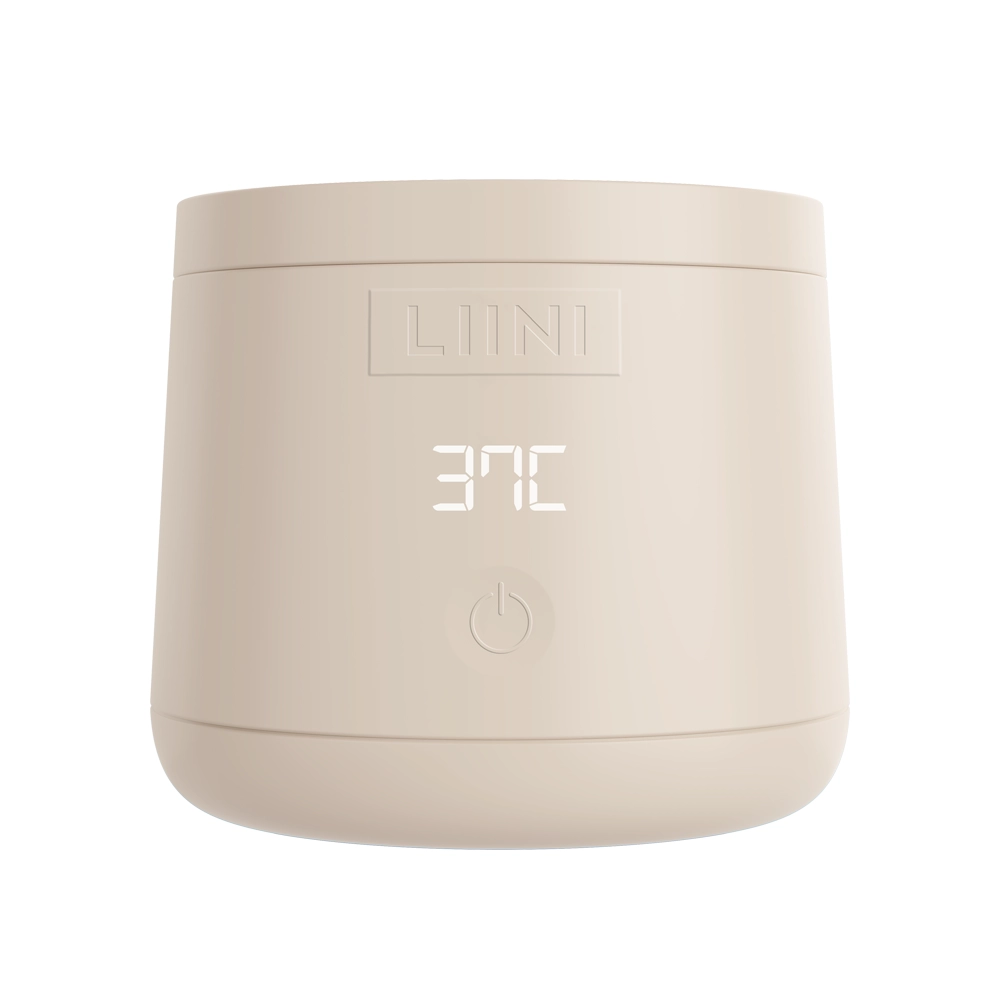
 4.0 PRObattery · on the go
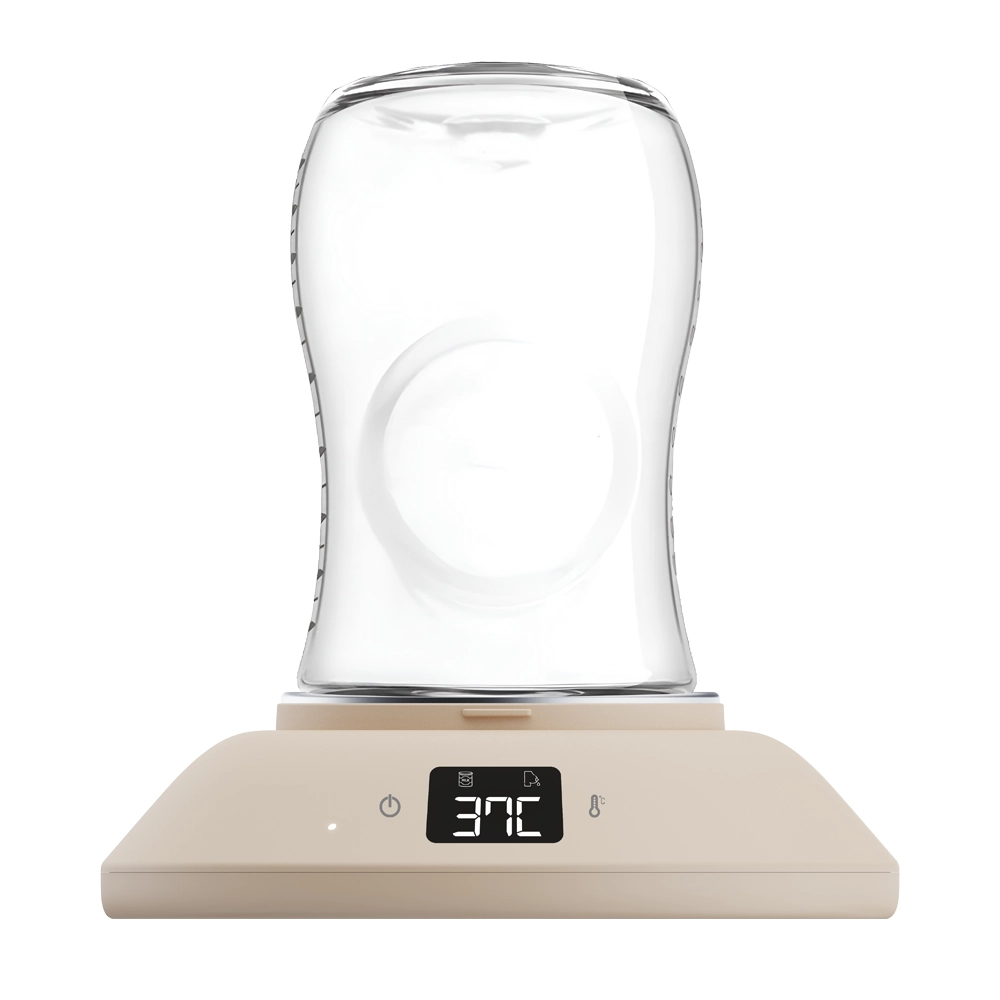 Home 230Vfor home
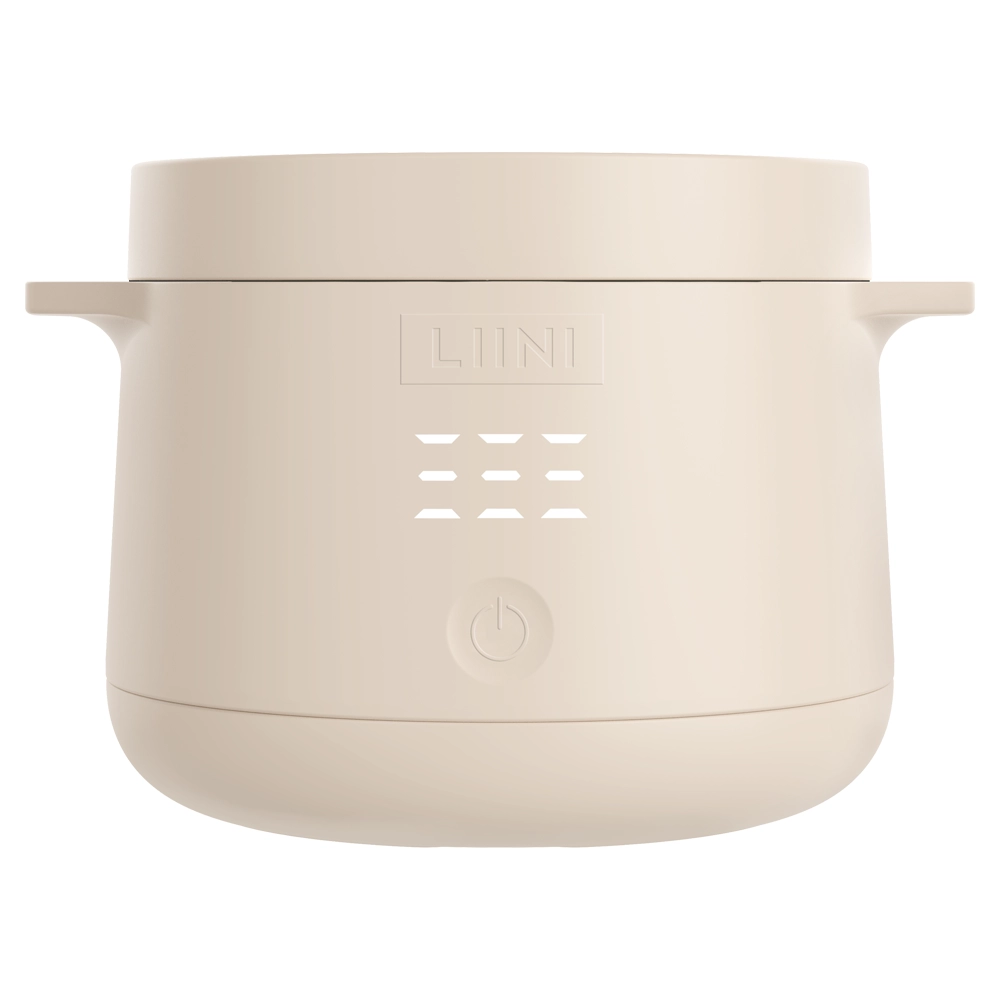 Baby food warmersfrom 6 months
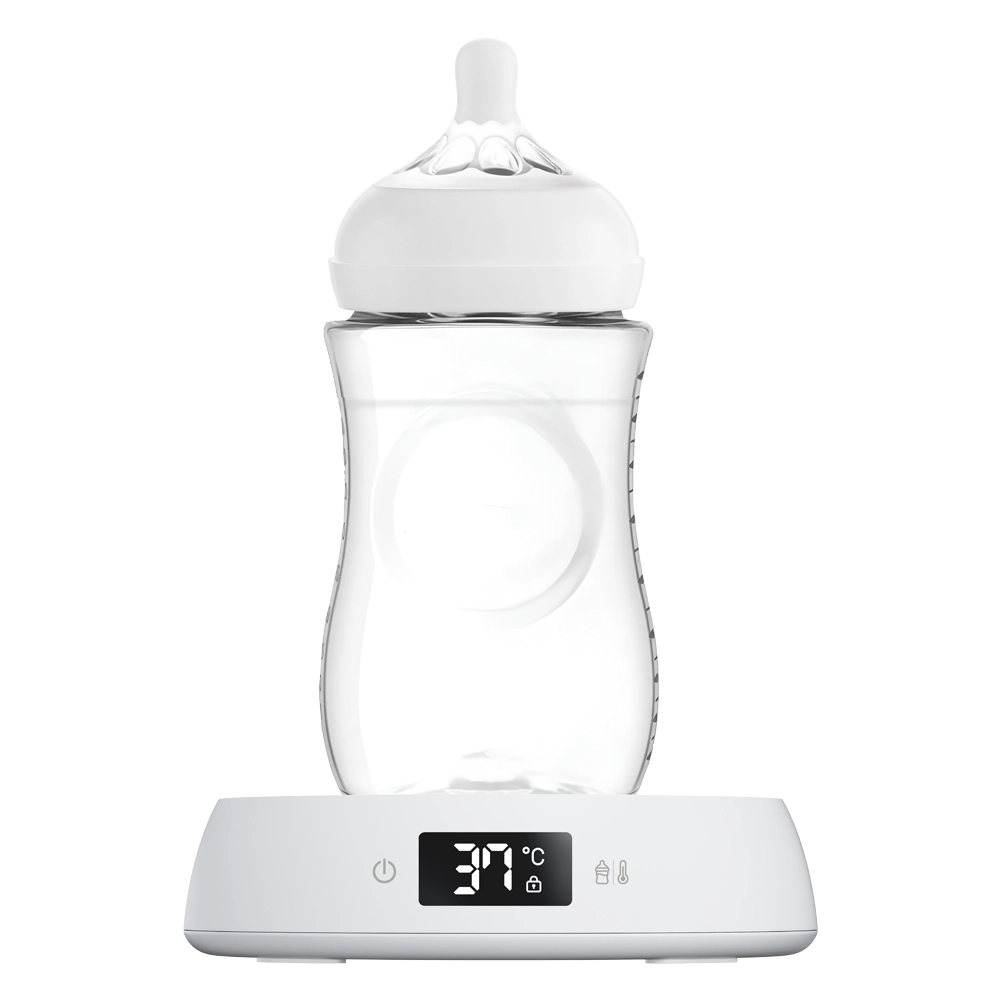 Night Stationfor the night




 Cleaning Wipes Monthly Pack
 Home & 2Go Bundle
 Formula Dispenser Avent










Cleaning and Sterilizing Baby Bottles
How to Clean Bottles Properly and When Sterilization Is Really Necessary: Step-by-Step Instructions, a Comparison of Recommendations from Expert Organizations, and All Methods with Their Pros and Cons.
Contents
In short
Clean baby bottles and nipples immediately after every feeding: rinse with cold water, wash with hot water, dish soap, and a bottle brush, or wash in the dishwasher at 65 °C and dry thoroughly. For healthy babies, the BLV and Pediatrics Switzerland do not consider boiling or sterilizing necessary. The British NHS, on the other hand, recommends sterilizing until at least the baby’s first birthday. Sterilizing is particularly advisable before first use, for premature babies, for sick babies, and for rubber nipples. If in doubt, ask the parenting counseling service.
Cleaning baby bottles will soon become as much a part of everyday life as changing diapers. But how thoroughly do you need to clean them, and do you also need to sterilize the bottles? The answers from expert organizations vary by country. Here you’ll find step-by-step instructions, a comparison of recommendations, and all the methods along with their pros and cons.
Cleaning Baby Bottles: Step by Step
Whether it’s pumped breast milk or infant formula: Clean the bottle, nipple, and all parts immediately after every feeding. According to an NHS health service, clean bottles help protect your baby from infections such as diarrhea and vomiting.
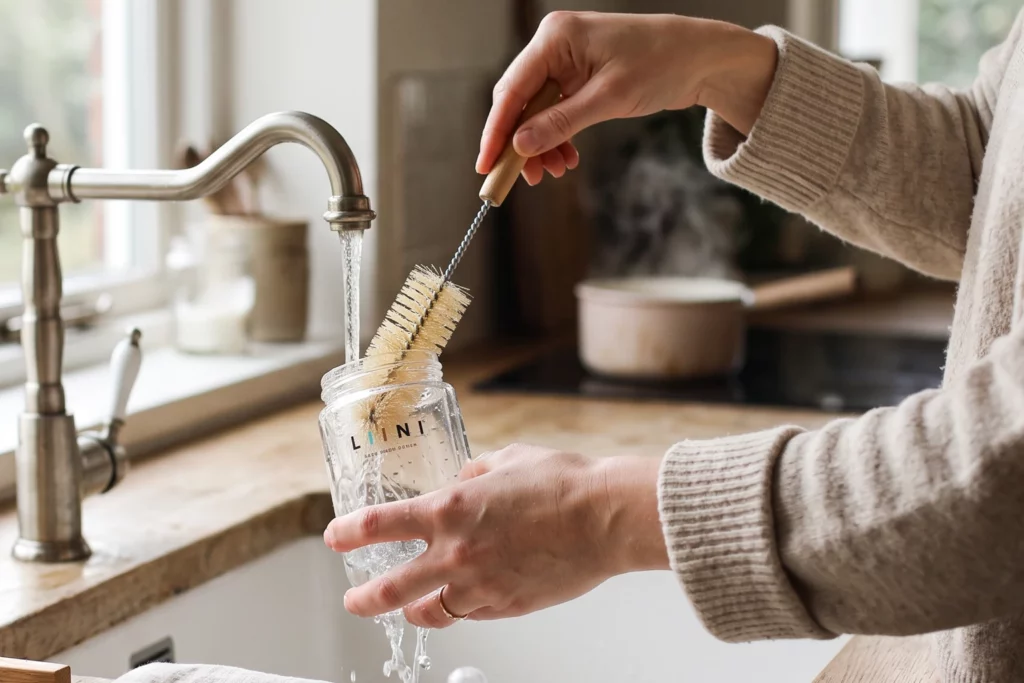
- Take the bottle, ring, nipple, and cap apart. If the bottle has a valve or insert, remove that as well.
- Rinse withcold water: Rinse all parts immediately with cold water so nothing dries on them. This is recommended by the BLV and “Eating Right from the Start.”
- Wash with hot water: Wash everything with hot water and a little dish soap, preferably in a clean basin that you use only for baby items.
- Brushing: Clean the inside of the bottle with a bottle brush that, according to BIÖG, you use exclusively for baby bottles. Clean the inside and outside of the nipple with a small nipple brush. Don’t forget the threads on the bottle neck and the screw ring.
- Rinse Thoroughly Rinse all parts under running water until no foam is visible.
- Dry: Place the bottles upside down on a clean towel or a drying rack and let everything dry completely.
- Store dry. Don’t reassemble the parts until they are completely dry. Store them covered with a clean kitchen towel or in a closed cabinet.
In the dishwasher: According to the BLV, you can also clean bottles and nipples in the dishwasher using a full cycle at 65 °C. The Inselspital Bern recommends placing the bottles so that the water spray reaches the entire inner surface. Check the instructions beforehand to make sure your bottles and nipples are dishwasher-safe.
Tip
According to Inselspital, adding a tablespoon of vinegar to the water used to boil milk helps prevent limescale buildup. To find out which water is best for the milk itself, read the guide “Which Water Is Best for Baby Food?”
The guide “Preparing a Bottle: Step by Step” shows you how to prepare the bottle hygienically afterward.
Sterilizing Baby Bottles: What the Experts Recommend
Do you need to boil or sterilize baby bottles as an extra precaution? Experts don’t agree on this. Swiss and German authorities generally consider it unnecessary for healthy babies, while British and American authorities take a more cautious approach.
| Specialized Center | Healthy Baby at Home | Boil or sterilize additionally |
|---|---|---|
| BLV, Swiss Society of Pediatrics, SGE | Clean thoroughly, by hand or in the dishwasher at 65 °C | Not necessary for bottles and silicone nipples |
| Inselspital Bern | clean thoroughly | Daily during the first 3 months of life, or in a dishwasher set to at least 65 °C |
| Lindenhof Hospital, Bern | clean thoroughly | Not necessary for healthy babies; in cases of thrush, vomiting, or diarrhea, after each use, or in a dishwasher set to at least 65 °C |
| Germany (Gesund ins Leben, BIÖG, BfR) | Clean thoroughly; dishwasher at 65 °C | Not necessary in private households; additional safety measure according to the BfR |
| Austria (“Eating Right from the Start”) | clean thoroughly | especially during the first months of life |
| Canada, Quebec (INSPQ) | clean thoroughly | Before first use; for infant formula, up to 4 months after each feeding |
| United Kingdom (NHS) | clean thoroughly | Sterilize everything until at least 12 months of age |
| United States (CDC) | clean thoroughly | daily for babies under 2 months old, premature infants, or those with weakened immune systems |
Our recommendation: For a healthy, full-term baby, thorough cleaning after each meal is sufficient. This is the advice from the BLV and Pediatrics Switzerland. Sterilization is recommended in the following cases:
- Before first use: Thoroughly clean new bottles and nipples before using them for the first time. The Institut de santé publique du Québec (INSPQ) recommends disinfecting them as well. Be sure to follow the manufacturer’s instructions.
- Premature babies and babies with weakened immune systems: The U.S. Centers for Disease Control and Prevention (CDC) recommends sterilizing bottles at least once a day for these babies and for babies under 2 months of age.
- Sick baby: If your baby has thrush, is vomiting, or has diarrhea, according to Lindenhof Hospital, boil bottles and nipples after each use or wash them in the dishwasher at a temperature of at least 65 °C.
- Rubber or latex nipples: They become porous. According to the SGE and Gesund ins Leben, you should boil them occasionally or replace them more often.
- First few months of life: If you want to play it safe, follow the advice of Inselspital Bern: It recommends boiling bottles and nipples daily during the first 3 months of life or washing them in the dishwasher at a minimum temperature of 65 °C.
Important
If your baby is born prematurely or is sick, ask the hospital staff or your pediatrician how to clean bottles, nipples, and breast pump parts. If your baby shows signs of illness, such as vomiting or diarrhea, contact your pediatrician.
An Overview of Methods: Boiling, Steam Sterilizer, and More
Before sterilizing, always clean bottles and nipples thoroughly, as recommended by the NHS.
| Method | Here’s how | Advantages | Disadvantages |
|---|---|---|---|
| Boiling | Cover the parts completely with water in a pan and boil vigorously for 2 to 10 minutes, depending on the source | Only one pot needed | According to the NHS, teats wear out faster; limescale |
| Steam Sterilizer (Vaporizer) | Pour in water, place the parts with the openings facing down, and start according to the instructions | Sterilizes multiple bottles at once with minimal effort | Takes up space and uses electricity; clean according to the instructions |
| Microwave Sterilizer | Place the steam container with water in the microwave according to the instructions | Fast and compact | Only for microwave-safe parts that do not contain metal |
| Dishwasher | Full cycle at 65 °C | No extra effort | Cleans thoroughly, but according to the NHS, does not sterilize |
| Cold sterilization | Place items in a solution of tablets or liquid and cold water | No electricity or heat required—convenient for travel | At least 30 minutes; according to the NHS, replace the solution every 24 hours |
When cold-sterilizing, according to the NHS, make sure no air bubbles remain in bottles or nipples. For steam and microwave sterilizers, always follow the manufacturer’s instructions.
Teats and bottles: when should you replace them?
The expert organizations do not specify a fixed schedule. The key factor is their condition:
- Check regularly: According to Inselspital, check bottles and nipples regularly for cracks and replace them as needed.
- Discard immediately: If a nipple has a hole, a crack, or feels different, discard it immediately, according to INSPQ. Replace it before it becomes soft or sticky.
- Rubber nipples more often: Latex and rubber nipples become porous and need to be replaced more often than silicone nipples.
- Boiling shortens their lifespan: According to the NHS, if you boil teats often, they’ll wear out faster.
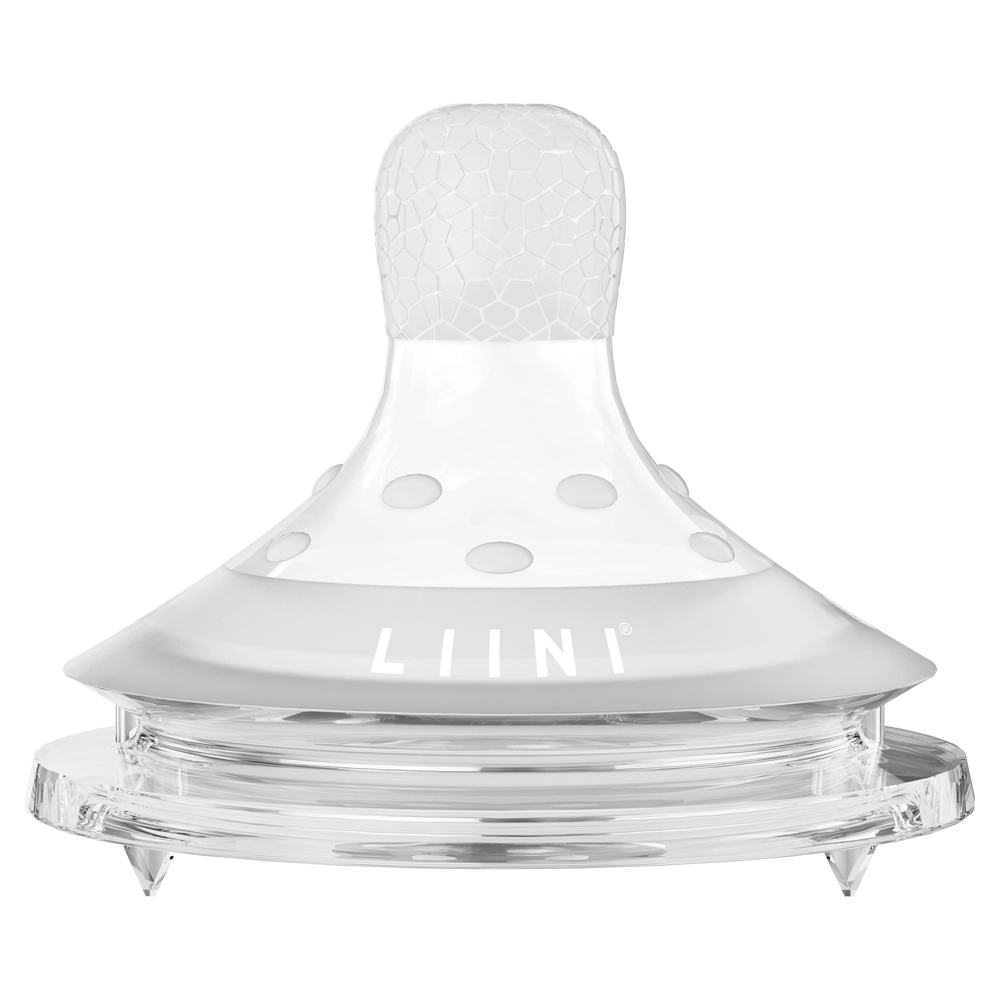
The LIINI® nipple is available in the following sizes depending on age: 0+ (from birth), 3+ (from 3 months), and 6+ (from 6 months). You can find all sizes under ” Nipples.”
Glass or Plastic: What Matters When Cleaning
The manufacturer’s instructions specify how hot plastic bottles can get and whether they’re safe for the dishwasher or sterilizer. According to a study by Trinity College Dublin, hot water and sterilization release significantly more microplastics from polypropylene bottles. To learn what this means and how glass and plastic compare in everyday use, read our guide “Glass or Plastic Baby Bottles?”
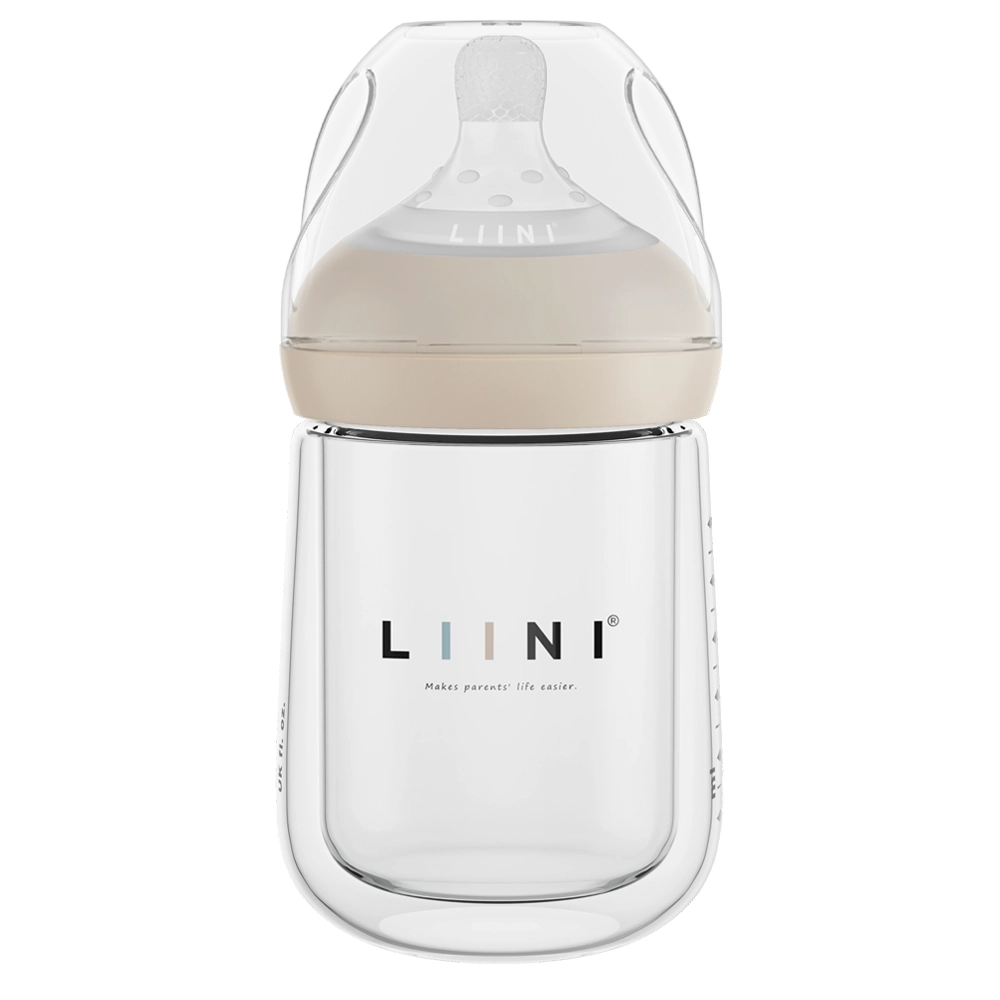
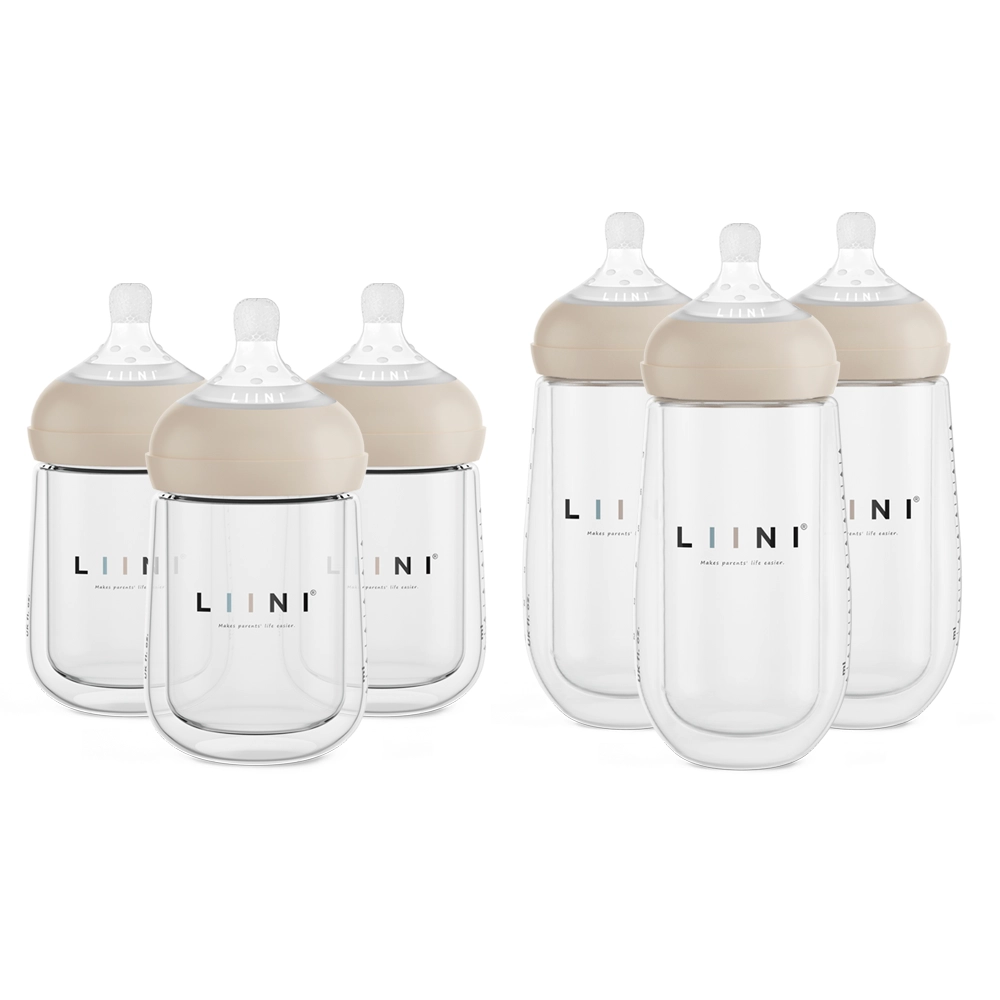
The LIINI® double-walled baby bottle is made of double-walled borosilicate glass. According to LIINI, it is not dishwasher-safe; you should wash it by hand. Check it for cracks before each use. LIINI recommends disinfecting the bottle and its parts before each use. Contact LIINI customer service to find out which method is best for this. You can find all sizes under “Glass Baby Bottles.”
From LIINI


Cleaning Your Breast Pump and Accessories
Similar guidelines apply to the parts of your breast pump. According to Breastfeeding Promotion Switzerland, you should wash all parts that have come into contact with milk after pumping using hot water and dish soap or in the dishwasher. If your baby is younger than 2 months, was born prematurely, or has a weakened immune system, the CDC recommends sterilizing the pump parts at least once a day after cleaning. Clean the motor and tubing according to the manufacturer’s instructions.
For information on how to properly store expressed milk, see the guide “Expressing and Storing Breast Milk.”
Frequently Asked Questions
Do I need to sterilize baby bottles?
Not necessarily for a healthy baby in Switzerland. The BLV and Pediatrics Switzerland consider thorough cleaning by hand or in the dishwasher at 65 °C to be sufficient. Sterilization is recommended before first use, for premature babies, for sick babies, and for rubber nipples.
How long do I need to boil baby bottles?
The German Federal Institute for Risk Assessment (BfR) and “Eating Right from the Start” recommend at least 2 minutes in rapidly boiling water; the CDC recommends 5 minutes; and the NHS recommends at least 10 minutes. The parts must be completely submerged in water and thoroughly cleaned beforehand.
Until what age should you sterilize baby bottles?
That depends on the expert source. The NHS recommends it until at least 12 months of age; Inselspital Bern recommends it during the first 3 months of life; and the CDC recommends it especially for babies under 2 months old. The BLV, Pediatrics Switzerland, and German expert organizations do not consider it necessary for healthy babies.
Is the dishwasher sufficient?
For cleaning, yes—using a full cycle at 65 °C, according to the BLV. According to the Inselspital, a dishwasher set to at least 65 °C can also replace boiling. The NHS, however, emphasizes that a dishwasher cleans but does not sterilize.
How often do I need to replace teats?
The expert organizations do not specify a set schedule. Check pacifiers regularly: According to INSPQ, replace them before they become soft or sticky, and discard them immediately if they have cracks or holes. Replace rubber and latex pacifiers more often than silicone ones.
Are UV sterilizers recommended?
An NHS health service in Cambridgeshire and Peterborough advises against them: UV devices may be ineffective and potentially dangerous. It’s better to stick with boiling, steaming, or cold sterilization.
Can I prepare clean bottles for the night?
Yes, as long as they’re completely dry and covered—for example, with a clean kitchen towel. To learn how to prepare a bottle quickly and hygienically at night, check out the guide ” How to Prepare a Bottle Quickly at Night.”
Sources
- Fact Sheet: Preparing Baby Bottles, Federal Office for Food Safety and Veterinary Affairs(BLV)
- Recommendations for Infant Nutrition (2017), Nutrition Commission of the Swiss Society of Pediatrics (Pediatrics Switzerland)
- Handbook “Eating and Drinking in the First Year of Life,” Swiss Society for Nutrition (SGE)
- Information Sheet: Preparation of Infant Formula, Insel Group, Inselspital Bern
- Infant Formula: Preparation and Administration. Information Sheet for Parents, Lindenhof Group, Lindenhof Hospital, Bern
- Storing Breast Milk, Breastfeeding Promotion Switzerland
- Hygienic Preparation of Baby Bottles, “Gesund ins Leben” Network
- Hygiene During Bottle-Feeding, kindergesundheit-info.de, Federal Institute for Public Health (BIÖG)
- Recommendations for the Hygienic Preparation of Powdered Infant Formula, Federal Institute for Risk Assessment (BfR)
- Preparing Formula (Parent Information), WHO/UNICEF Baby-Friendly Initiative (BFHI) Germany
- Formula Feeding: What to Keep in Mind (Fact Sheet), Eating Right from the Start (AGES, Ministry of Social Affairs, Federation of Social Insurance Carriers)
- Cleaning Bottles, Nipples, and Breast Pumps, Institut national de santé publique du Québec (INSPQ)
- Bottle-feeding advice, NHS
- How to Sterilize Feeding Equipment, NHS Best Start in Life
- Bottle Hygiene and Equipment Sterilization, Cambridgeshire and Peterborough Children’s Health, NHS
- How to Clean, Sanitize, and Store Infant Feeding Items, Centers for Disease Control and Prevention (CDC)
- How to Keep Your Breast Pump Kit Clean (PDF), Centers for Disease Control and Prevention (CDC)
- High levels of microplastics released from infant feeding bottles during formula preparation, Trinity College Dublin